Kaunda on Mwalimu: Recalling life and legacy of fellow Founding Father
26 - August - 2024 23 min read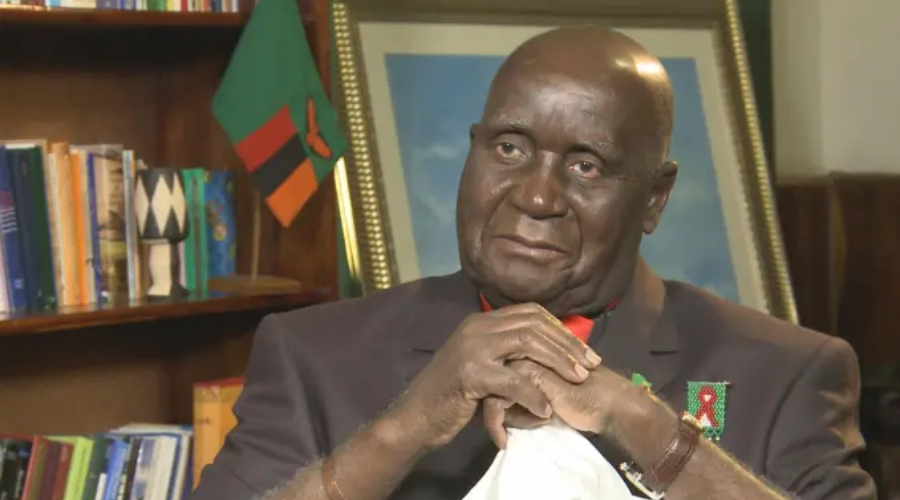
Zambian Founding Father and former President Kenneth Kaunda offers a profound and deeply personal reflection on the enduring bond he shared with Tanzania’s Julius Nyerere, commonly called Mwalimu. This narrative is meticulously constructed, weaving together a rich tapestry of interviews—both published and unpublished—alongside exclusive insights from impeccable official sources and close personal aides who witnessed their historic partnership firsthand.
Kaunda and Mwalimu’s relationship transcended the boundaries of a standard political alliance; it was a "brotherhood for life" that served as the primary anchor for the liberation struggles across Southern Africa. Through this account, Kaunda provides a rare, intimate look at Mwalimu’s character, exploring the philosophical underpinnings of Ujamaa and how their shared vision for Pan-Africanism and human dignity shaped the destiny of two sister countries. This was a partnership forged in the fires of resistance, where the two leaders leaned on one another to navigate the complex geopolitical landscape of the brutal realities of minority rule in neighbouring countries.
As he recounts their journey, Kaunda highlights the mutual respect and spiritual connection that fuelled their collective fight against colonialism. He delves into the quiet moments of consultation and the public moments of triumph, illustrating how their friendship became a beacon of stability for the region. This tribute serves as a vital historical record, capturing the essence of Mwalimu’s legacy through the eyes of the man who knew him best. It is a celebration of a friendship that defined an era, offering modern readers a blueprint for African unity and leadership grounded in morality. By documenting these shared memories, this narrative ensures that the revolutionary spirit of these two icons remains a living inspiration for future generations.
The relationship with Mwalimu Julius Nyerere and Tanzanians started before Zambia’s 1964 independence. There is no doubt that Julius Nyerere and I were very close. I met him when I went to Tanganyika for a meeting of a Pan-African group. It was in the early 1960s. Some participants and organisers were from outside Africa, but supportive of Africa’s freedom struggle.
Tanganyika became independent in December 1961. Mwalimu Julius Nyerere was the first Prime Minister of Tanganyika before and later, when Tanganyika and the Island of Zanzibar merged to become Tanzania, Mwalimu became President. His Tanganyika African National Union (TANU) merged with Zanzibar’s Afro-Shirazi Party to become Chama Cha Mapinduzi (CCM).
But at that time in the early 1960s, Mwalimu opened that conference. We became friends, genuine friends, and that friendship grew. Julius Nyerere, who was born in 1922, was just two years older than me. He was a dedicated, humble, warm, and cheerful person. At the same time, he was a thinker.
From the beginning, I liked what he stood for. I think Mwalimu also liked what he saw in me. Ours was to be a close friendship and brotherhood for life. Together, we were later to work, as humble servants, with our fellow citizens and the people of good will all over the world, in the quest for Africa’s freedom from colonialism, racism and apartheid.
Our approaches to the problems of Africa were very similar. Besides political freedom, we also wanted to have the living conditions of our people improve from what it was at independence. We both believed in development in all areas of human endeavour.
We believed in the cooperation of people and nations. We both believed in the dignity of the African person on the world’s stage. Mwalimu was one of the founders of the Organisation of African Unity (OAU). Mwalimu (Teacher) as lovingly called by people in East Africa, was greatly respected in Africa and beyond.
UNIP in Tanzania
From Tanganyika’s independence in 1961, Nyerere supported many parties and liberation movements fighting for freedom. From his actions, it was clear that he was a Pan-Africanist. Mwalimu and Tanzania helped the United National Independence Party (UNIP), our freedom party in Zambia.
Before independence, we decided to set up UNIP offices outside Zambia. This would make it easier to spread the message and experience of our struggle internationally. We also needed support. We managed to get support from Egypt, where the great Pan-Africanist, Abel Abdul Nasser, was President. We set up an office in Cairo and sent Reuben Chitandika Kamanga to operate it.
Near home, just neighbouring us, Mwalimu Nyerere and the people of Tanzania offered us a place. Kapasa Makasa went to run the UNIP Office in Dar es Salaam. It was getting friends from all over the world to know what was going on in Zambia.
As UNIP, we did not have many resources to run an external office, but the Government of Tanzania assisted us greatly and provided us with what we needed. Even after our independence, the UNIP Office was still in Dar es Salaam.
When Zambia was about to become independent, we, in the Central Committee of UNIP said we would support our neighbours fighting for freedom. We could not be free when our brothers and sisters around us were in bondage. So, at our independence in 1964, we willingly invited freedom fighters to be our guests. They moved from Tanzania to Zambia. We became a Frontline State in Southern Africa’s struggle. My friendship with Mwalimu became even closer.
Shared journey
From the early days of the independence of Tanganyika and Zambia, Mwalimu and I were to be bound together in a journey collectively involving the people of Africa and the world. This journey involved what we shared closely, the fight for human justice. There are many things we discussed and acted upon. Our journey involved various areas of human endeavour. This ranged from the political field and the fight against colonialism and racism to general human development. Our visions were very closely shared. From that closeness, together with the people of Tanzania, Zambia, and all the people of goodwill all over the world, we acted.
My friendship with Mwalimu and the people of Tanzania deepened as we continued passing through the various challenges of the struggle. We dealt with common development challenges.
Through cooperation, his Ujamaa and our philosophy of Zambian Humanism, we tried to deal with improving every person’s quality of life. For freedom struggle, the OAU Liberation Committee was hosted in Tanzania, and coordinated by Tanzanian Col Hashim Mbita.
Southern Africa
Mwalimu and the Tanzanian people did a wonderful job to look after Africa’s freedom fighters. From South Africa, there were freedom fighters, both African National Congress (ANC) and Pan-Africanist Congress (PAC). Mwalimu looked after freedom fighters from various groups of Zimbabwe.
Close to Tanzania, he looked after FRELIMO of neighbouring Mozambique. He also looked after Agostinho Neto’s MPLA and SWAPO of Namibia in Dar es Salaam. Mwalimu the Tanzanian people opened their doors and welcomed us all. In all aspects, my brother Mwalimu was really a great guardian of Africa’s freedom fighters.
When we in Zambia got independence in 1964, all freedom movements moved to Zambia. So, in the region, it is in Tanzania and Zambia, where Southern Africa’s freedom fighters had external centres and we just went on supporting liberation movements the way Tanzania had been doing.
Mwalimu and I greatly collaborated in supporting freedom struggle in Southern Africa. We believed in the dignity of all people. We believed that you could not be free if your neighbours were not. I have been a great believer in Jesus Christ’s teaching and the commandments about loving God totally and loving your neighbour as yourself.
As we got our independence in 1964, liberation movements shifted from Tanzania to Zambia and we became a Frontline State. That meant that the struggle by FRELIMO in Mozambique intensified and contributed to pressure on the Portuguese Government and the Lisbon coup of April 1974. The events paved the way for the independence of Mozambique and Angola.
Samora Machel and Agostinho Neto became Presidents. The other liberation movements in Zimbabwe, Namibia, and South Africa later achieved change. But throughout all this, as we worked with oppressed people, Mwalimu was a key facilitator of the process of liberation. For a long time, after we elected him, he was our Chairperson in the Frontline States, until when he retired in 1985.
Farewell to Frontline States, Mwalimu retires, 1985
I remember we met in Mozambique when Mwalimu was bidding farewell to us. When they elected me to be the new Frontline Chairperson, I said, “Comrades, there can only be one Julius Nyerere. So, don’t expect me to be another Julius Nyerere.”
Then, Samora Machel said, “Yes, we agree there can only be one Julius Nyerere. But we also know that there can only be one Kenneth Kaunda!”
Mwalimu and humour
Yes, Mwalimu was humorous. I remember when I was still Prime Minister, I flew to Dar es Salaam. Julius Nyerere was at the airport to meet me. He made a comment. He said, to others, since I had become the Prime Minister, a position with a lot of stresses, my hair was also quickly turning grey like his!
UDI and Rhodesia
When Zambia was economically threatened after the 1965 Unilateral Declaration of Independence (UDI) by Ian Smith in Rhodesia, Mwalimu and the people of Tanzania supported us. Since the colonial and racist regimes of Southern Africa were hostile to us, we needed to urgently and securely transport imports and exports. We needed to securely bring in oil to keep us moving efficiently.
We first approached the British. When we asked them to help us, they said Smith rebellion would soon finish and we, therefore, did not need to go through all the expenses of building the infrastructure. But when nothing was stopping the Smith regime, we knew we would be in trouble if we did not have alternatives.
We had to work on the Great North Road, Zambia-Tanzania Road Services, the great TAZARA Railway, and TAZAMA Pipeline because we were being blocked by the Ian Douglas Smith regime. Zambia felt the pressure and Mwalimu understood our need to be independent of Rhodesia and the Southern routes dominated by colonial and racist regimes.
That is how Mwalimu and I discussed the situation. We agreed to go to the Italian Government for the oil pipeline. We had discussions and agreed to go to China for Tanzania-Zambia Railway. We completed the projects ahead of schedule. The British were still watching. So, Mwalimu and I, together with our people, worked on joint economic programmes that strengthened us in a very hostile political environment. Without the support of Tanzania, it would have been difficult for Zambia to survive those difficult times.
Like Tanzania, in this situation of the Southern Africa struggle, Zambia was greatly involved and affected. For us, shortly after independence, the action of the “Unilateral Declaration of Independence” by Ian Smith in Rhodesia posed many challenges to us. It meant more had to be done to support the struggle. It also meant that Zambia would be affected economically, politically, and in various ways. Even though fairly vulnerable, we, in Zambia, continued supporting the liberation movement.
Our transport routes and economies had been linked to South Africa. But, after independence, economic and trade links placed us in a difficult position. We had to disengage from reliance on Rhodesia and South Africa for our economy, supplies, and trade routes. Without alternatives, Zambia would be held to ransom by these racist administrations.
To strengthen ourselves, I talked to Mwalimu and we discussed the idea of transporting our goods through Dar es Salaam rather than South Africa, and the Portuguese ruled Angola and Mozambique. We had to bring into Zambia some petroleum products. Because it was an emergency, we airlifted oil from Dar es Salaam.
Later, we began to use road tankers to transport oil. There were also other trucks moving goods. We had to export copper, for our vital foreign exchange earnings, and receive vital oil and other supplies. The road to Dar es Salaam was long and difficult. We discussed with Mwalimu. Eventually, we formed Zambia-Tanzania Road Services (ZAMTAN). Many drivers came from Somalia and these helped a lot. We built an all-weather Great North Road connecting Zambia and Tanzania.
But road transportation had limits in delivering fuel. We then got together with Mwalimu and decided to make Tanzania-Zambia Oil Pipeline from Dar es Salaam to Ndola, in Zambia, where oil was refined. Italy helped to build Indeni Refinery.
We also thought of a railway line from Dar es Salaam to Kapiri Mposhi in Zambia. The British refused to support such a project. So, we discussed the problem with Mwalimu. He believed in the project and encouraged it.
Since the British had refused, we decided to ask China for help. Mwalimu Nyerere went to visit China. I followed with a China tour shortly afterwards. The result was that China would construct the railway line. Then, the work started and by August 1973, TAZARA had entered the Zambian soil and ahead of time—the railway line—all 1,860 kilometres long, was completed.
In July 1976, TAZARA started operating. Thanks to Mwalimu and the people of Tanzania, we were able to divert from reliance on Rhodesia and South Africa. Meanwhile, we continued supporting and following United Nations sanctions against colonial and racist regimes.
Pressure was so much on us that, at one time, Julius Nyerere said he could understand our position if we decided not to follow the painful economic sanctions. But we, in Zambia, felt it was by principle that we supported the struggle. We could not let go while our brothers and sisters around us were suffering.
Idd Amin
Ugandan Gen Idd Amin came to power in January 1971. Milton Obote was removed while we were at the Commonwealth Summit in Singapore. I am often uncomfortable with the fact that, after speaking with Mwalimu, I had urged Milton Obote to go to a meeting with us so that we could pressurise the British to act on the Rhodesian question.
I was sad when Milton was removed from office while we were in Singapore. Idd Amin’s regime led to many deaths and problems in Uganda. There was a time when Mwalimu and I were meeting in Mwanza. Then, suddenly Idd Amin arrived with his plane and tried to enter our meeting. Mwalimu explained to him that he was not part of our meeting. Amin later left us to continue our meeting. We were dealing with Southern Africa’s key issues.
In late 1978, Idd Amin invaded Tanzania. Mwalimu spoke to me about it. I understood his position. We supported Mwalimu, but I felt we did not assist him to the extent we would have loved to. I was not able to do much to assist him because of the situation Zambia was in. We ourselves were in a grievous situation as Rhodesian forces had become more regular in their bombing in Zambia and we had to protect ourselves.
But Tanzania repulsed Idd Amin and, together with Ugandan fighters, Mwalimu took the fighting right into Uganda. In April 1979, Idd Amin, whom both of us, Mwalimu and I, had considered a disturbed person, fled Uganda. Mwalimu did a great job in removing him from office.
Strong ties of friendship
Our friendship kept on growing. In 1964, when twins were born in our family, our family decided to name the girl “Cheswa” and the boy “Kambarage”, which is Mwalimu’s middle name.
We worked so closely that sometimes we would meet by ourselves, just the two of us. We were thinking about how to go about the struggle in Southern Africa. We would meet in various places. Sometimes it was in Mbeya and other places in Tanzania, and at times it was Mbala and Kasaba Bay in Zambia.
Mulungushi Club and Frontline States
To support the struggle against colonialism and racism, we kept on working closely with Mwalimu and the Tanzanian people. Milton Obote of Uganda was also active. The three of us would meet in various places in our countries. One time, I invited my two colleagues to Kabwe at Mulungushi Rock, where our ruling party UNIP was having a conference.
My two colleagues liked the place and name, and asked that we call our group of three governments “Mulungushi Club”, which continued being involved in the liberation of Southern Africa. We campaigned at many conferences, involving the OAU, the Commonwealth Group of nations, the Non-Aligned Movement, the United Nations, and through other platforms.
But the team was greatly disturbed by events that happened in January 1971. We were then about to go to the Commonwealth Heads of Government Meeting in Singapore. We, in the Mulungushi Club, wanted to use the conference to press Britain to act against the racist Rhodesian regime of Ian Smith.
In Singapore, as we pressurised British Prime Minister Edward Heath, he angrily said some of the Mulungushi Club members would not be able to return to their countries. So, later it was learnt that Idd Amin, the Heard of the Uganda army, had taken over office in a coup. It turned out that Heath and the British knew something about the coup that removed Milton Obote from office.
But Idd Amin’s coup affected the Mulungushi Club. We did not want to associate with Amin. Under him, tens and tens of thousands of people were killed. Many people went into exile. Because of Amin’s regime, Uganda’s relations with partners, Kenya and Tanzania, in the East African Community (EAC) went sour. For the liberation movement, it meant we now could not count on Uganda continuing to play a role.
South African letters
In the troubled 1960s, I still believed in dialogue and non-violent ways of resolving conflict in Southern Africa. I remember that I had realised that in handling the situation in Zimbabwe, the British Government was no longer useful to us. I thought we should approach South Africans.
In the late 1960s, I wrote to apartheid South African Prime Minister John Vorster. I took the copies of my letters to Mwalimu and Obote. Then, Vorster wrote back to me, thinking that I would become a traitor to the cause of the African people. When I replied to him, saying I would not betray the cause, Vorster made a statement to the effect that I was a double dealer and he would expose me.
Mwalimu heard that, and so he telephoned me and said, “Please, just reveal those letters you wrote to that man.” Sikota Wina was our information man and he quickly worked to publish the letters of my correspondence with Vorster. So, Vorster’s move to discredit me was itself discredited. Vorster had not known that I had been sharing our correspondence with my brothers Mwalimu and Obote.
‘The time Mwalimu and I differed’
I remember one difference I had with my dear brother Mwalimu. A Kampala conference chaired by Amin was very tough. There were great differences. Unfortunately, some of my colleagues did not agree with me. All radicals, including Mwalimu, were against what I was proposing. I had told my Minister for Foreign Affairs Vernon Mwaanga that with changes taking place in Angola, it was important for Angolans to work together.
In fact, we had earlier met - Mobutu, Nyerere, and myself. We met in Congo. I suggested a Government of National Unity to involve members of various liberation movements in conflict. I feared that otherwise we would have prolonged civil war in Angola.
My suggestion seemed to have been an agreed position. But when we went to another meeting, I don’t know why, Mwalimu and some of our colleagues, changed their position. They were not in favour of a Government of National Unity. Sadly, the conflict in Angola continued with big consequences.
That was the time Mwalimu and I differed. I can’t remember any other meeting where we differed on issues of Southern Africa. We were together on various issues throughout.
China, Tanzania, and United Nations
The USA declared Formosa was the real China and should be a member of the United Nations (Security Council). Tanzania and Zambia led a good number of independent African states to question that and declare that the real China was the People’s Republic of China and we won.
Naturally, for Tanzania, Zambia, and other African countries, this was a matter of principle. The People’s Republic of China leadership, from Chairman Mao Zedong to the current leadership, have appreciated this principled stand very much. We have remained firm friends. This has not meant that we turned against the United States of America. A matter of principle came up and we stood for it, won, and it ended there.
TAZARA, China and the future
TAZARA is extremely important to us. At that time, we were surrounded by many forces South of us, in Rhodesia and in South Africa. They were beginning to press on us very much. So, we thought we had to do something about it.
I spoke to my brother Mwalimu and we began to think of TAZARA. We thought of that, we discussed it, and we agreed that we must build a railway between Dar es Salaam and Zambia. We agreed that we should approach, jointly, our good friends in China.
We approached Chairman Mao and his Premier Zhou EnLai. As usual, they were very kind to build, with us, TAZARA. That is how we built TAZARA. It is the railway of great historical importance because it was helping us to fight racial forces in Southern Africa. Not only that, the future of TAZARA is of great importance. We can make it help many other people. I think of getting other people to join us in doing business with China using TAZARA. We can do that. We can build for others in this area. They can join us in doing business with China through TAZARA. They can come to TAZARA, use TAZARA to come over this area. So, we can discuss that, look at that, and we can build a bigger TAZARA than we have now. So, the hope, the future, of TAZARA is real. Yes, we need to not only use it ourselves, Tanzania and Zambia, but we can also talk to other countries around us. This development can help us.
It is a real good future to build China’s future business with other African countries in this area. Southern Africa can do a lot with TAZARA. China’s future is real because it is popular here and can help us all, including countries like Angola, Mozambique, Botswana, Namibia, Zimbabwe, and all areas here.
I think that there is real hope for the future for TAZARA. We built it to help only Zambia in a good way. But we should now look at it in a bigger way. China’s friendship with countries here is real. They are building friendship in this area. It is a good development. I am very hopeful indeed.
We were going to rebuild TAZARA, no doubt about it. I look forward to that. That is what we intend to do and it will be done. It was done, yes. It helped somewhere. Now it has got to be re-done, reorganised. China, Tanzania, Zambia, all three - plus others will now join us. They will join us, no doubt about that.
Now we are going to lift up TAZARA, the revival of TAZARA. We are going for the revival of TAZARA. We are going to do it. I am hopeful. So, China is a great friend of developing Africa, not just Zambia. We mean business and I know that China has been ready. It has done much for us. Yes, we have worked together…!
Prison and fasting
Even after he left the presidential office, Mwalimu and I were still close. You may remember how Frederick Chiluba’s regime detained me on Christmas Day in 1997. When I was taken to prison, I asked security officers: “Why have you brought me here? Tell whoever has told you to bring me here that I will not eat, I will not drink any water, and I will not shave until they tell me why I have been detained.”
The following day my wife, Betty Kaunda, brought me some food… I said, “Leave this food and I will pass it on to my fellow prisoners.” Well, she gave it to them. The following day, they took me to Kabwe. The Commissioner of Prisons came and said, “Please, old man, start eating.” I said, “Young man, I am not eating until they tell me why I am here.”
So, the next thing I saw was that Mwalimu had arrived with his wife, Maria. They flew them from Lusaka to Kabwe with the same chopper which had taken me to Kabwe. So, Mwalimu and Maria got off and came to me.
“Kenneth, how are you?” asked Mwalimu. “I am alright, Julius. How are you? What brings you here?” I asked. “You have brought me here,” he replied. “I haven’t. What has happened?” I asked. So, he told me: “Chiluba has told me that you are not eating or even drinking any water. You are not shaving.” “Until they tell me why I am being kept here, I am not going to eat,” I said.
So, Julius eventually said, “If you don’t eat, and don’t drink water, then Maria and I will join you. We are ready to spend nights here with you!” From Mwalimu’s words, I was terribly defeated. What could I do? I couldn’t make Maria suffer in that prison because of me. So, I decided to break my fast then.
The Commissioner of Prisons was happy. He smiled and brought some cheese biscuits and something to drink, I think it was orange juice. So, that is how I broke my fasting. Mwalimu ate with me. Later, he rushed off to the chopper. That is how I was defeated by my brother Mwalimu!
Chiluba had been worried. I had spent some four to five days without eating. He was receiving messages from Clinton, Nelson Mandela, and other leaders from various parts of the world. Soon, my fasting was going to boom ring on Chiluba and make matters worse for him. He approached Mwalimu, who was concerned about my fast for different reasons. He had a genuine concern for my health.
In return, Mwalimu had told Chiluba, before he came to see me, “If a former Head of State is being investigated, you do not send him to prison. You keep him under house arrest.” So, the following day, after Julius left, they moved me from prison back home to Kalundu, Lusaka.
Farewell Julius Nyerere
Then, in August 1998, we heard that Mwalimu was suffering from leukaemia and was admitted to a London hospital. When I heard that he was ill, I prepared a poem to encourage him.
Then, I heard that things were getting worse. On October 14, 1999, I heard that my brother Mwalimu had passed away. He was 77. When I went to the funeral, I wept like a child. His body was there in Dar es Salaam, and then was taken to his home village for burial. After I had put him to rest, I returned to Lusaka. That is how I lost a great friend, my brother Mwalimu. I always remember our journey together.
Kaunda was born at Lubwa Mission in Chinsali District, then Northern Rhodesia (now Zambia) on April 28, 1924. He passed away in Lusaka on June 17, 2021, aged 97.
Source: Who Is Who Tanzania
Original article: https://whoiswhotanzania.co.tz/article/kenneth-kaundas-inspiring-views-on-mwalimu-tanzania-6